
Understanding Solar Battery Costs
Average Price per Kilowatt-Hour
South African homeowners keep asking solar battery how much per kilowatt-hour really costs. The honest answer: between R8,000 and R12,000 per kWh installed. That price includes battery chemistry, inverter compatibility, and labour. Lithium iron phosphate units command a premium over lead-acid because they cycle deeper and last longer.
Several variables shift that figure. Installation complexity, battery management systems, and warranty terms all matter. Load-shedding patterns also influence sizing, which changes total spend. We see prices dropping year on year as manufacturing scales up.
- Usable capacity versus raw kWh ratings
- Cycle life and guaranteed throughput
- Depth of discharge limits
When you ask solar battery how much, the total cost includes more than the sticker price. A 5 kWh battery that only delivers 4 kWh costs more per usable unit. The cycle life and guaranteed throughput determine the real cost per kilowatt-hour over the battery’s lifespan.
What the Quoted Price Includes
A staggering 40% of South African solar installations operate below their true potential due to hidden system costs. Solar battery how much you ultimately pay often hinges on components you never see on the spec sheet.
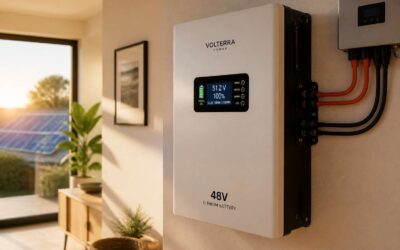
The quoted price is rarely just the battery cell. It encapsulates the battery management system (BMS), which governs cell balancing and temperature control. That BMS is the silent guardian that dictates whether your unit survives three years or thrives past ten. Inverter integration is another layer; a compatible hybrid inverter communicates with the battery to manage charging cycles effectively.
Consider the quieter costs that creep into the final bill:
– Mounting hardware and protective enclosures
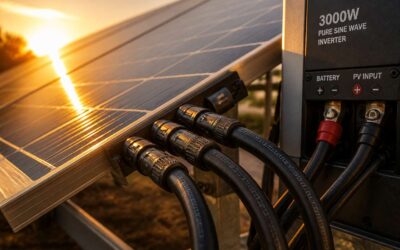
– Cabling and circuit breakers rated for DC current
– Delivery and specialised handling fees
– Commissioning and system testing by a certified technician
Labour alone can separate a functional setup from a dangerous one. The installer’s expertise determines your safety margins. Another variable is the battery’s C-rate, which describes how fast it can safely discharge. A higher C-rate costs more. Solar battery how much you spend reflects this engineering, not just the chemistry inside the box. Every rand paid buys a layer of resilience against the dark.
Typical Installation and Labor Fees
I’ve seen installation fees swing from R4,000 to over R15,000 for similar battery systems! The difference rarely comes down to greed; it comes down to physics and access. A ground-mounted battery in a garage takes one technician a morning. The same unit, wall-mounted in a double-storey home with crawl-space conduit, requires two technicians, a scaffold, and a full day of work.
Battery units weighing over 100 kilograms need specialised handling equipment, especially for roof or mezzanine placements. Municipal inspection schedules and Certificate of Compliance paperwork add administrative hours. Johannesburg and Cape Town command premium labour rates. These variables, beyond the battery chemistry alone, determine solar battery how much you ultimately pay.
The labour component typically includes:
- The number of technicians required for safe handling
- Whether your installation needs conduit work or surface mounting
- The complexity of integrating with an existing inverter system
Price Variations Across Regions
Ask two installers in different provinces to quote the same lithium battery and you will receive wildly different numbers. Solar battery how much you pay depends heavily on your postal code. Cape Town installers charge a premium driven by demand and load-shedding intensity, while Durban rates reflect a different competitive landscape. Rural areas face transport surcharges that can add 15% to the final quote.
Regional regulatory quirks also shift prices. Certain municipalities require additional paperwork or specific inverter certifications, and those administrative costs land in your quote. Installer density matters too. A city with twenty qualified technicians sees price competition; a town with two does not. In my experience, this gap explains more variance than battery chemistry ever will.
- Distance from major distribution hubs
- Local municipal approval timelines
- Availability of certified installers in the area
These variables mean the identical battery system can differ by thousands of rands between provinces. When you ask solar battery how much, the answer is always geographic before it is technical.
Key Factors That Influence Solar Battery Pricing
Battery Chemistry and Technology
Battery chemistry determines longevity more than any other variable. Lithium iron phosphate (LFP) cells tolerate deeper discharge cycles, while nickel manganese cobalt (NMC) offers higher energy density but shorter lifespan. Lead-acid remains cheaper upfront, yet its cycle count falls drastically in hot South African climates.
The technology inside the cell affects solar battery how much you ultimately pay per cycle. Thermal management systems regulate operating temperatures, add cost, and prevent premature degradation. A robust battery management system (BMS) influences the final figure too, protecting against overcharging and imbalance.
Consider these chemistry-specific traits:
– LFP: 3,000 to 5,000 cycles at 80% depth of discharge
– NMC: 1,500 to 2,500 cycles in a lighter, compact form
– Lead-acid: roughly 500 cycles with regular maintenance
I have seen these cycle differences shift the real cost dramatically over a decade.
Usable Capacity and Power Rating
The usable capacity of a battery, not its nominal size, commands the price. A 10 kWh cell that yields only 8 kWh forces you to examine the cost per usable kilowatt. Power rating adds another layer: a higher kW output supports heavy appliances but raises inverter costs. In South Africa, load shedding tests every system, so these two figures determine your backup hours. Consider these pricing forces:
- Higher depth of discharge increases usable capacity, raising cost
- A higher power rating requires thicker cables and larger breakers
- Matching capacity to actual usage avoids overspending
The true solar battery how much depends on this pairing of capacity and rating, not the brand alone.
Depth of Discharge and Cycle Life
Load shedding does not care about the brand on your inverter. It only cares about the raw staying power of your battery. When you ask the question of solar battery how much, you are really asking about the cost of endurance. Two specifications determine this endurance more than any other: depth of discharge and cycle life.
Depth of discharge, or DoD, tells you how much of the battery’s stored energy you can safely use before recharging. A battery with a 50% DoD means you only get half of its capacity out of it. Pushing it further damages the cells and shortens the lifespan. Over time, the effective daily cost shifts dramatically. A battery that forces you to protect a shallow DoD will require a larger physical unit to meet the same nightly usage, which inflates the upfront price and makes the solar battery how much calculation less attractive.
Cycle life measures how many charge and discharge cycles the battery can handle before its capacity drops to a useless level. A higher cycle life means the battery lasts longer, spreading the initial cost over more years of service. In South Africa, where daily load shedding can trigger multiple cycles in a single day, a battery rated for 2,000 cycles might only last two years. A unit rated for 6,000 cycles could serve you for a decade.
– Depth of discharge dictates the usable energy per cycle
– Cycle life determines the total energy delivered over the battery’s lifetime
– Both factors directly influence the rand-per-cycle cost
A cheaper battery with a shallow DoD and low cycle life is never a bargain. The real solar battery how much figure only emerges when you divide the upfront price by the total kilowatt-hours delivered over the entire working life. Every cycle you harvest matters.
Round-Trip Efficiency and Performance
Round-trip efficiency quietly shapes the solar battery how much equation. It measures how much energy returns after a full charge and discharge, and most units fall between 85% and 95%. A 90% efficient battery loses 10% of every kilowatt-hour to heat and internal resistance. Over thousands of load shedding cycles, that loss accumulates into real money.
Performance under South African heat changes the calculation. Lithium cells degrade faster above 30 degrees Celsius, and a battery that throttles under stress forces you toward a larger, pricier unit. I always ask for the round-trip efficiency rating before considering any quote!
- Voltage stability under sudden loads
- Temperature tolerance without derating
- Charge acceptance at partial states
The solar battery how much figure only makes sense when you factor in wasted energy, not just stored capacity.
Brand Reputation and Warranty Coverage
A battery brand is a reflection of its years in the field, and South Africa has seen both rising stars and fading names in the load shedding era. A premium manufacturer with a proven local track record often commands a higher price, but that premium is a direct payment for reliability. The warranty is the financial ledger of that reliability; it is the manufacturer’s promise written in rands and cents. When you ask solar battery how much, you are also asking how long the maker will stand behind their work.
Warranty coverage in this market is not a uniform document. A robust guarantee typically includes:
– A minimum of 10 years or 6,000 cycles, whichever comes first.
– A performance guarantee that ensures the battery retains at least 60% of its original capacity.
– A clear, local claims process that doesn’t require shipping the unit back to a foreign warehouse.
A lesser-known brand might offer a warranty that looks similar on paper, yet their local service network is thin. If the company defaults, your investment becomes a silent lump of inert chemistry. The true solar battery how much calculation must include the cost of this protection. A longer warranty with a reputable brand spreads the risk over a decade, which lowers the annual cost of ownership. I have observed that consumers who chase the lowest initial quote often pay twice when a warranty claim vanishes into a void of unanswered emails. The price of peace of mind is hidden in the fine print, but it surfaces every time you read the terms of engagement.
Complexity of System Integration
The complexity of system integration often goes unnoticed when you first ask solar battery how much. A battery is not a standalone appliance; it must speak the language of your existing inverter, your solar array, and your household’s consumption patterns.
Consider these integration variables that quietly shape the final quote:
– The communication protocol between the battery and the inverter, whether CAN bus or proprietary
– If your current inverter is hybrid or requires an AC-coupled retrofit
– The need for additional metering or smart load management devices
Each variable demands a different level of engineering. A simple plug-and-play scenario costs less than a retrofit that requires firmware updates and additional hardware. When you ask solar battery how much, the true answer depends on how deeply the new chemistry must integrate with your existing electrical system.
Comparing Solar Battery Options by Cost
Budget-Friendly Entry-Level Batteries
South Africans often ask solar battery how much before considering what the battery can actually deliver. The entry level segment exists for homeowners who want to keep essentials running during load shedding without financing a full energy ecosystem.
Budget friendly options like basic lead acid or entry level lithium units come with constraints. They offer lower cycle counts and shallower depth of discharge, yet they operate reliably for years when sized correctly. Weigh the upfront price against the number of cycles you will realistically use each week.
- Longer payback when cycled daily
- Shorter warranty periods
- Simpler battery management systems
The real comparison for solar battery how much at this tier rests on expectations. I find these units serve a defined purpose, and their value is measured against that purpose alone.
Mid-Range Solutions for Average Homes
Three hours of load shedding a day changes how a home consumes power. When homeowners ask solar battery how much, the figure that matters is the cost per usable cycle over a decade, not the sticker price alone. This tier typically offers 5 to 10 kWh of usable capacity, enough to keep the router, lights, and television running through a four hour outage.
For South African households, the value comes in specific features:
– Modular lithium cells allow additional modules later without replacing the whole unit.
– Active thermal management keeps the battery stable through Highveld summer heat.
– Local warranty support avoids sending faulty units overseas.
Mid-range batteries connect cleanly to existing hybrid inverters. The gap in price between entry level and premium narrows once you add installation, surge protection, and configuration. Solar battery how much finally comes down to the daily draw you anticipate, not the brochure promises.
Premium High-Capacity and Off-Grid Systems
Premium high capacity batteries push solar battery how much into a different bracket entirely. These systems typically start at 15 kWh usable capacity and climb toward 30 kWh for full off grid living. The cost premium is not linear; you pay for larger inverters, deeper cycle ratings, and backup redundancy that entry level units simply cannot provide.
Consider what drives that price:
- Higher discharge rates for running pumps or geysers during extended outages.
- Scalable architecture that lets you add solar panels later without reconfiguring the bank.
- More sophisticated battery management systems that balance cell wear across years of daily cycling.
Off grid setups demand a separate conversation. Solar battery how much depends on whether you expect to run the entire household for two days of low sun, not just the essentials. Most South African users find that a 20 kWh system with a generator backup costs roughly double a mid range install, but the per cycle cost drops significantly if you actually cycle it daily.
Cost per Cycle and Lifetime Value Analysis
When we talk about solar battery how much, the quoted price rarely reveals the true cost. The real comparison happens at cost per cycle. Divide the installed price by the number of cycles the warranty guarantees, then factor in degradation under real South African conditions. That figure changes the ranking entirely.
Consider these comparison factors:
- Usable energy delivered over the full warranty period
- The degradation curve beyond the warranty
- Expected replacement and disposal costs
- How often you cycle the system daily
A battery rated for 6000 cycles at 50% depth of discharge will outlast a cheaper unit rated for 3000 cycles, even if the upfront price seems steep. Solar battery how much depends on how long you intend to stay, how many times you will discharge the bank, and what each cycle costs across the system’s lifetime.
Financial Incentives and Long-Term Savings
Federal Solar Investment Tax Credit
Ask solar battery how much after the Federal Solar Investment Tax Credit, and the number transforms. This credit returns 30% of qualifying costs, but eligibility hinges on how the battery charges. Standalone units that pull from the grid do not count. That rule separates genuine solar storage from backup extras.
South African homeowners rarely face this decision because local rebates, like Section 6B, ignore batteries entirely. Your price stays raw. Over a 15 year lifespan, the absence of a credit shifts the break-even point dramatically. Long-term savings depend on tariff inflation and usage patterns, beyond the sticker price. To qualify for any equivalent credit, you must meet three conditions:
- Charge the battery predominantly from solar panels
- Install the system at your primary residence
- Track installation costs with original receipts and contracts
State Rebates and Utility Programs
South Africa offers no federal credit for solar batteries. Municipal rebates, where they exist, focus on solar water heaters or energy efficiency audits. Eskom’s feed-in tariff pays for exported generation, not storage. This changes the break-even math, because a battery that shifts evening load avoids peak tariffs without producing extra export income.
Given this vacuum, households must compare City Power’s time-of-use pilot or Cape Town’s load-shedding response program. Some municipalities provide small grants for smart inverters. When estimating solar battery how much you can justify, include avoided peak charges and utility payments, not rebate promises. The rest stays raw cost.
Net Metering and Self-Consumption Benefits
There is a strange arithmetic to solar ownership here, where the sun itself is not the only currency. When the grid fails, a battery becomes a shield against time, but its true value lies in how you weaponize the hours of daylight. Net metering in South Africa rarely credits you for the power you store, it only pays for what you push back to the grid. This forces a calculation that most homeowners miss. The real financial incentive is self-consumption, the act of using every kilowatt before the sun dips below the horizon.
You are not just buying a battery; you are buying the ability to ignore Eskom’s peak tariffs. A solar battery how much it costs is a question of perspective. The cost is high, but the avoided evening rates create a phantom income. Consider the load-shifting benefits:
– Charge during cheap, sunny hours.
– Run your geyser and appliances at night without touching the grid.
– Avoid the 8pm to 6am penalty rates.
Municipalities will not pay you for this storage. They will only pay for exported generation, which is a pittance. The long-term savings come from a simple truth, you use your own power, and the grid becomes a backup, not a necessity. That shift in behavior, not the hardware itself, is where the money is truly saved.
Estimating Payback Period and ROI
The payback period for a solar battery in South Africa is not a fixed number. It shifts with every tariff increase and every load-shedding schedule. To estimate ROI, compare the installed cost against the kilowatt-hours you stop buying from the grid during peak hours. That figure, not the headline price, determines how quickly the investment returns. This is where solar battery how much you pay becomes a calculation of behaviour.
Assume 15kWh of nightly consumption shifted away from Eskom. At a peak rate of R3.50, that is R19,000 saved annually. Divide the installed cost by that number to get your payback period. Most systems settle between six and nine years, but the number narrows when you factor in:
- Annual tariff escalation above inflation.
- The rising cost of load-shedding downtime.
- Your actual discharge depth each night.
A 10% tariff hike shortens the payback window by roughly 15%, which rewards those who size their battery to their true nightly draw rather than a theoretical maximum.
Potential Resale Value and Insurance Impacts
Load shedding has changed property valuations. Homes with backup power are selling faster, and buyers scrutinise the energy setup during inspection. A solar battery how much you paid becomes a negotiation point. Sellers who can prove a working system with a documented lifespan often recover a portion of the original cost in the sale price. The battery is an asset, not just a utility bill reduction.
The long term savings go beyond electricity. Insurance companies have started asking about energy storage. Some policies offer premium reductions for installed safety features. Others may increase premiums if they deem the system a fire risk. The distinction comes down to certification and installation quality. An accredited installer provides paperwork that satisfies insurers. That documentation protects your investment in more ways than one.
Consider what affects your total cost:
- Proof of installation by a certified electrician
- Battery certifications recognised by local authorities
- Warranty registration and transferability documents
A transferable warranty matters. It adds value during resale because the next owner inherits protection. Ask about this before purchase. The solar battery how much you pay today influences tomorrow’s premium and future sale price. It is a layered calculation.

0 Comments