
Understanding Solar Battery Storage: Key Concepts
How a Solar Storage System Works
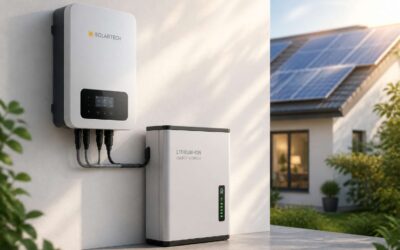
In South Africa, where rolling blackouts are a daily rhythm, a solar battery energy storage system doubles as quiet alchemy—turning sunshine into dependable power after the sun sets. A recent industry report suggests households with solar storage can shave peak demand by up to 25%, turning harsh tariffs into gentler bills and giving you a bit more control over the day’s end. Think of it as a personal energy broker: it stores surplus PV energy and releases it when you need it, keeping the lights on during those stubborn outages.
- Capturing energy from PV panels and storing it for later use
- Managing storage capacity, charge/discharge cycles, and battery health
- Delivering power to appliances or exporting to the grid when appropriate
Smart inverters orchestrate this dance, and monitoring dashboards keep you in the loop, a rare mix of practicality and tech swagger that SA households appreciate.
Core Components and Architecture
South Africa lives in the rhythm of load shedding. A solar battery energy storage system shifts the tempo, letting sunshine fund the night. In SA, households with storage can shave peak demand by up to 25%, softening tariffs and adding daily steadiness.
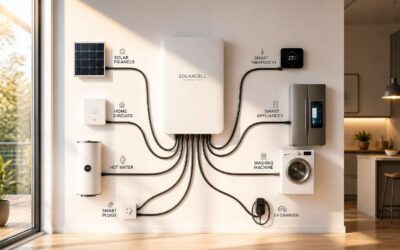
Understanding its architecture means tracing three threads: how energy is captured from PV panels; how storage capacity and charge-discharge cycles are managed to preserve battery health; and how power is delivered to appliances or exported to the grid when appropriate.
- Battery modules and chemistry choices
- Smart inverters and power electronics
- Battery management system and monitoring dashboards
This tapestry of components, layered with a robust control system, creates a resilient energy flow—quiet, calculated, and ready to adapt to the day’s unpredictable sun.
Battery Technologies: Lithium, NiMH, Lead-Acid, and More
Sunlight is an empire, and in South Africa a solar battery energy storage system sits on the throne, turning daylight into midnight comfort. In sun-kissed towns, households with storage shave peak demand by up to 25%, translating to steadier nights and softer tariffs. Rooftops glow with stored sun—an alliance of day and night.
Understanding the key concepts begins with the variety of battery technologies, their cycles, and their temperaments in heat and shade.
- Lithium-based chemistries, including Lithium Iron Phosphate, offer high energy density and long life.
- NiMH provides reliability and moderate cost in warm climates.
- Lead-Acid variants (AGM, Gel) remain economical and rugged.
Each option shapes the magic of storage—how deeply a battery can be discharged, how many cycles survive, and how quickly power can surge to an appliance or recharge from the sun.
Charging and Discharging Cycles: Efficiency and Longevity
In South Africa, households with solar storage shave peak demand by up to 25%, turning daylight into midnight comfort. Understanding solar battery energy storage system begins with the cycles that power every surge and recharge.
Charging and discharging cycles are the heartbeat of the setup; charging cycles determine how often you refill capacity and how deeply you tap it. Depth of discharge, ambient temperature, and charge rate all tilt the balance toward longevity.
- Depth of discharge
- Temperature
- Charge rate
Discharging cycles test endurance; a higher round-trip efficiency means less energy wasted and smoother surges to your appliances! In sun-warmed kitchens and shaded lounges, managing the cadence of use helps the system sing for many dawns.
Common Myths About Solar Storage
Across South Africa, a sun-filled home with a solar battery energy storage system can shave peak demand by up to 25%, turning daylight into midnight comfort. Understanding the technology means unpacking a few core concepts and myths that shimmer in the daylight.
Here are common myths that linger in households and showrooms alike.
- You must go off-grid to save money.
- Storage is prohibitively expensive and impractical.
- Cloudy days wipe out performance.
In reality, capacity, safety, and serviceability govern everyday reliability more than the forecasted clouds. The myths crumble when you glimpse the whole picture.
Residential Use Cases: Home Solar Storage
Enhancing Home Energy Independence
Across South Africa, grid instability has turned the roof into a stage for energy autonomy. The solar battery energy storage system becomes a practical beacon, letting homes keep essential power during outages and bill shocks alike. Picture mornings where your kettle, fridge, and lights wake with the sunrise—quiet power, reliable and a little magical!
Residential use cases span comfort, savings, and resilience. Here are practical scenarios:
- Back-up power for essential appliances, keeping the lights on and the fridge cold during outages
- Optimized self-consumption by storing daytime solar for evening use
- Emergency readiness and peace of mind for rural homes or load-shedding cycles
Morning routines stay steady as the sun climbs, turning fear of darkness into a confident rhythm and giving families the quiet assurance that independence is within reach.
Sizing Your Home Battery System
Power outages have become the modern climate, and in South Africa a steady kettle is as priceless as a sunny forecast. A solar battery energy storage system changes that calculus, letting mornings start with reliable power for the kettle, fridge, and lights. For residential use cases, sizing your home battery system is the discreet craft of matching needs to capacity so you avoid idle capacity or short nights.
Key sizing considerations include:
- Daily energy consumption (kWh) and the essential loads you must keep running
- Autonomy window (how many hours off-grid you want during outages)
- Inverter rating and system voltage compatibility with your installation
- Sun-right daytime solar availability and evening demand patterns
With the right balance, homes stay bright and comfortable, even when the grid sulks—and yes, the neighborhood might hear your fridge hum a contented tune.
Grid-Tied vs Off-Grid Residential Setups
Across South Africa, grid-tied and off-grid homes are redefining reliability. A solar battery energy storage system turns sunny hours into power you can count on after dark. Grid-tied setups pull from sun and grid, keeping the fridge humming. Off-grid homes gain independence, but require a larger reserve and careful planning. The right balance depends on outages, roof exposure, and daily rhythms.
Common residential configurations include:
- Grid-tied with storage: store daytime energy for evening use and export excess to the grid when needed.
- Off-grid with storage: full autonomy, backed by larger battery banks and a generator for extended outages.
Whichever path you choose, the solar battery energy storage system transforms how power feels at home—quiet, predictable, and ready when the lights dip.
Safety, Maintenance, and Warranties
Across South Africa, reliability is the quiet negotiator at the dinner table; a local survey shows 48% of homeowners rate power continuity as the top concern. I’ve seen how a solar battery energy storage system can turn that worry into a calm guarantee. Safety is built in—enclosures are fire-rated, wiring is shielded, and equipment is installed by certified technicians who verify ventilation and proper isolation. Maintenance focused on safe operation keeps the home running smoothly, not a source of worry.
Maintenance and warranties: The strongest storage systems ship with remote monitoring, temperature control, and manufacturer-backed warranties that cover the battery, inverter, and controls. Regular inspections by a qualified pro help catch thermal drift or signs of degradation before they affect daily life. Investing in this technology brings peace of mind as much as power.
- Warranty scope: battery pack, inverter
Commercial and Industrial Storage Solutions
Reliability, Demand Management, and ROI
Uptime is revenue in disguise—the cost of a blackout can ripple through calendars and cash flow. In South Africa, a solar battery energy storage system turns electrical risk into steadier, measurable performance for commercial and industrial sites.
Demand management and reliability go hand in hand: peak shaving lowers tariff charges, while consistent power supports production schedules and customer commitments. ROI emerges from reduced energy charges, avoided penalties, and longer equipment life driven by stable loads.
- Reliability: protects against outages and voltage dips
- Demand management: flattens peak usage for lower bills
- ROI: faster payback through energy arbitrage and incentives
Given tariff evolution and policy shifts, businesses that couple storage with strategic procurement gain a durable edge—quietly turning a capital asset into a continuous source of competitive advantage.
Modular Storage for Businesses
In a climate where outages sculpt the workday and ripple through revenue, modular storage becomes a moral and financial choice. A well-configured solar battery energy storage system turns electrical risk into predictable performance for Commercial and Industrial sites across South Africa, turning downtime into data—uptime you can measure and rely on.
Modular storage for businesses offers scalability and speed.
- Scalability that grows with demand and tariff shifts
- Rapid deployment with minimal disruption to operations
- Improved uptime and dependable service to customers
Behind every module sits a decision about value, time, and trust. The system becomes a quiet engine of continuity—pushing margins toward the future with less fear of the next outage. It is, in essence, a steadier, more humane approach to energy stewardship, powered by the solar battery energy storage system.
Compliance and Safety Standards
Power outages don’t just darken rooms; they erode margins and morale. In South Africa, unplanned downtime can slash productivity, with some sectors reporting losses of up to 20% during outages.
Compliance and safety are not afterthoughts; they’re the backbone. Conforming to South Africa’s electrical codes—SANS 10142-1—and OHSA requirements is non-negotiable, as is alignment with international safety frameworks for energy storage. A solar battery energy storage system should meet IEC 62619 for stationary batteries and IEC 62933-2-1 for complete storage systems, with fire and ventilation considerations woven into design and installation.
- Certified components and traceability
- Fire protection, venting, and thermal management compatibility
- Battery management system (BMS) integration and grid interconnection standards
Done right, compliance becomes a quiet engine of reliability and trust—an ethical posture toward energy stewardship.
Design, Installation, and O&M Best Practices
Site Assessment, Permitting, and Codes
Sunlight is free, and in South Africa that should translate into reliable power—yet the real magic happens when a solar battery energy storage system turns excess sun into steady comfort. Design blends practicality with wonder, tailored to your load, climate, and the rhythm of the grid.
Installation hinges on a meticulous site assessment, clear permitting, and codes that protect people and property. Assess spatial constraints, ventilation, and access; verify electrical headroom; and align with fire safety and labeling standards.
- Site accessibility and ventilation
- Electrical headroom and protective devices
- Fire safety and required clearances
- Interconnection readiness with utilities
Among best practices for the ongoing care of this asset, prioritize monitoring, regular inspections, and preventative maintenance of cooling, connections, and battery health. Keep digital records current and accessible, and align the program with warranties and service commitments.
System Design and Electrical Integration
Power stitches together when sun becomes steady energy. “Storage is the bridge between sun and supper,” a South African farmer once told me. A well-tuned solar battery energy storage system turns bright days into reliable power, smoothing the creases of load-shedding.
Design and electrical integration hinge on harmony: align with your daily load, climate, and the rhythm of the grid. Consider these pillars:
- System design tuned to your load profile and climate realities
- Inverter compatibility, protective devices, and headroom for future growth
- Robust monitoring and clear data for maintenance decisions
Installation should honor local codes, safe interconnection, and accessible service points. For O&M, establish monitoring routines, regular inspections, and preventative maintenance of cooling, connections, and battery health. Keep digital records current and align with warranties and service commitments. This is how a durable, heartful asset earns its keep, night and day.
Installation Best Practices and Scheduling
Sun and schedule dance when you design with care. A well-tuned solar battery energy storage system turns bright days into steady power, smoothing the creases of load and outage-prone evenings. Design, installation, and O&M are the three harmonies that keep that rhythm reliable in South Africa.
Installation best practices and scheduling set the pace. Prioritize proper interconnection, protective devices, and clear sequencing to avoid late-night surprises. Consider the following essentials:
- Permits, grid interconnection, and code-compliant wiring aligned in advance
- Installation sequencing guided by manufacturer recommendations and regional safety rules
- Commissioning windows and performance verification planned around predictable load periods
O&M anchors long-term value: for any solar battery energy storage system, routine monitoring, periodic inspections of cooling and connections, and up-to-date digital records tied to warranties and service commitments.
Commissioning and Performance Verification
In sunny South Africa, a well-tuned solar battery energy storage system turns blistering days into steady power and keeps evenings reliable as the grid wobbles. Design acts as the compass, shaping capacity, charge strategies, and resilience in every corridor of the installation.
Design best practices emphasize modularity, robust thermal management, and safe margins that grow with needs. A thoughtful layout reduces wiring complexity, simplifies installation, makes servicing easier, and ensures future upgrades endure without breaking the rhythm of a home.
Key commissioning and performance verification steps:
- Functional testing and manufacturer-guided run-time checks
- Safety verification of protective devices, isolation, and wiring
- Performance verification against baseline and seasonal load profiles
O&M anchors long-term value: routine monitoring, periodic connection inspections, and up-to-date digital records tied to warranties and service commitments help keep the system reliable for years.
Ongoing Maintenance and Battery Replacement
As I tell clients, a well-tuned solar battery energy storage system can turn blistering South African afternoons into a steady power heartbeat, even as the grid coughs and wheezes. “A stable battery is cheaper than a rolling blackout,” a veteran installer likes to say.
Design best practices prize modularity, robust thermal management, and safe margins that grow with demand. A thoughtful layout reduces wiring complexity and paves the way for future upgrades without disrupting the home’s rhythm.
- Modular architecture for easy expansion
- Efficient thermal management to protect longevity
- Clear, serviceable wiring routes
Installation considerations emphasize tidy routing, accessible disconnections, and clear labeling, ensuring safe integration with the house’s electrical system.
O&M anchors long-term value: routine monitoring, periodic inspections, and up-to-date digital records tied to warranties help keep the solar battery energy storage system reliable for years. When replacement is due, procurement and planning ensure a smooth, cost-conscious transition.
Safety Protocols and Certifications
Across South Africa, blistering afternoons meet their match when a well-tuned solar battery energy storage system hums at the heart of the home. The trick is not sheer capacity alone but how gracefully the system breathes—quiet, scalable, and ready to shoulder the day’s sun-powered rhythm. “Power should be quiet, reliable, and gracious,” says a veteran installer.
Design thrives on modularity; add bricks as demand grows. Robust thermal management keeps longevity intact under SA heat, while generous margins invite future upgrades without unsettling the living spaces.
Installation emphasizes tidy routing, accessible disconnections, and clear labeling to harmonize the system with the house’s electrical nervous system.
- tidy routing
- accessible disconnections
- clear labeling
O&M anchors value: routine monitoring, periodic inspections, and up-to-date digital records tied to warranties. Safety protocols and certifications—lockout/tagout, PPE, and compliance with SANS/IEC standards—keep the system trustworthy.
Market Trends, Economics, and Future Outlook
Current Market Landscape and Adoption Rates
Market trends in South Africa’s energy scene point to a tectonic shift: outages and daytime solar generation are nudging households toward self-reliance with a solar battery energy storage system. Storage is becoming a practical backbone, not a luxury, as communities demand resilience. “Storage isn’t a bonus—it’s the new grid,” drums a local installer.
Economic forces push adoption: falling storage costs and longer battery lifespans shorten payback, even as tariffs reward exporting surplus power. Financing options and warranties reduce upfront barriers, making a solar battery energy storage system a sensible line item in household and business budgets.
Future outlook and current market landscape show corporate and mining pilots in microgrids, weaving resilience into operations. Adoption rates are rising, and the trajectory is unmistakable. This solar battery energy storage system era reshapes how enterprises think about power.
- Falling hardware costs
- Policy clarity and incentives
- Rising demand for reliable power
Cost Trends, Financing, and Total Cost of Ownership
Storage isn’t a bonus—it’s the new grid. In South Africa, outages and daytime solar generation are nudging households toward self-reliance with a solar battery energy storage system. The shift makes resilience a practical baseline, not a luxury, and it’s changing how homes and businesses plan their power needs.
Falling hardware costs and longer battery lifespans shorten payback, even as tariffs reward exporting surplus power. Policy clarity and incentives in SA are widening access, with warranties easing risk and financing options smoothing the upfront bill.
Looking ahead, corporate and mining pilots are weaving storage into microgrids and operations across the country. As adoption climbs, the total cost of ownership becomes less opaque and more predictable.
- Financing options such as leases, PPAs, and consumer loans
- Integrated service agreements and warranties
- Maintenance and performance guarantees tied to system design
Advances in Battery Chemistry and Technology
Across South Africa, a quiet revolution is underway: homes and campuses pair sunshine with storage, turning intermittent power into a reliable asset. The solar battery energy storage system is shifting from luxury to baseline infrastructure as outages and tariff hikes reshape planning horizons.
Market dynamics reward longevity and efficiency. Falling hardware costs, longer lifespans, and smarter controls compress payback, while policy clarity and incentives accelerate adoption. Companies are embracing integrated service models that bundle design, warranty, and remote support into predictable total costs.
- Modular designs that scale with demand
- Advanced monitoring for proactive maintenance
- Standards-aligned warranties and service levels
Looking ahead, advances in battery chemistry and technology promise higher energy density and safer operation. Solid-state and alternative chemistries, including sodium‑ion variants, could ease sourcing challenges and expand deployments across South Africa’s diverse climate and terrain.
Policy Incentives and Regulatory Considerations
“Resilience isn’t optional; it’s the new currency!” a renewable strategist notes, as South Africa’s outages push storage from prestige to baseline infrastructure. Market dynamics reveal expanding project pipelines—residential, campuses, and commercial estates—driven by predictable performance and smarter remote monitoring that minimizes downtime and caps risk.
Economics are tightening adoption: falling hardware costs, longer lifespans, and smarter controls compress payback. The solar battery energy storage system turns sunny hours into dependable energy, hedging against tariff spikes and providing a resilient cushion when grid power falters.
Future policy incentives and regulatory clarity will shape the pace. Targeted incentives, faster interconnection queues, and standardised warranties will unlock scale.
- Clear interconnection timelines to reduce project risk
- Performance-based incentives that reward reliability and dispatchability
- Consistent safety and warranty standards across installers
0 Comments