
Pricing Landscape and Market Trends
Current price ranges by capacity
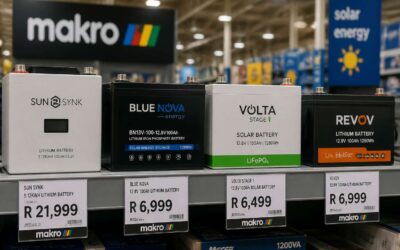
Powering homes with sun-drenched certainty, the lithium solar battery price acts as a pulse of the market! In the past two years, global prices for lithium-ion storage have fallen roughly 15%, yet South Africa’s logistics and import duties keep some models within reach only to slip away again.
Pricing landscapes shift with supplier mix, currency dynamics, and warranty offerings. From the field, I see how these pricing winds touch budgets and timelines. Here’s a snapshot by capacity:
- 5–8 kWh systems: approximately R40,000–R60,000
- 9–12 kWh systems: approximately R70,000–R95,000
- 13–20 kWh systems: approximately R100,000–R180,000
For buyers, monitoring the lithium solar battery price alongside capacity and warranty terms is essential as the market rebalances toward longer warranties and modular configurations.
Regional price differences
Price signals across the scene: global storage costs have fallen roughly 15% in two years, yet South Africa’s logistics and import duties keep some models within reach only to slip away again. The lithium solar battery price shifts with supplier mix, currency dynamics, and warranty offerings, shaping budgets and timelines as surely as winter shapes a coastline.
Regional price differences in South Africa reveal themselves in quiet, stubborn ways: coastal ports over inland warehouses, currency gyrations, and the cost of distribution.
- Port access and inland transport shaping final tags
- Local demand patterns and stock availability
- Warranty terms and modular configurations influencing value
Historical price trends and forecasts
The only thing steadier than a sunrise over Cape Town is the way lithium solar battery price bounces when demand sashays with supply. Historical price trends show cycles of spikes and dips driven by raw material costs, policy shifts, and solar adoption across markets; in South Africa, currency swings and import logistics add their own gusts to the wind. The result? Budgets wobble and procurement timelines stretch like a Durban traffic jam.
- Supply diversification and new mines easing bottlenecks
- Exchange-rate swings nudging rand-denominated quotes
- Warranty terms and configuration options affecting value perception
Looking ahead, forecasts hint at slower, more sustainable movement as multi-source supply chains mature and recycling gains traction. The price signal for solar storage will remain a moving target, but with better visibility as regional logistics align and warranties standardize.
Impact of supply chain disruptions
Volatility is the new normal in energy storage, and lithium solar battery price shivers with it. A single shipping delay or mine outage can tilt quotes across markets, turning budget approvals into a game of map coordinates. In South Africa, rand swings and import logistics add gusts to the wind, making the number feel almost alive—and unpredictable.
Several pressure points shape the Pricing Landscape right now:
- Global freight bottlenecks and rising container costs
- Mine outages and fluctuating feedstock prices
- Exchange-rate gyrations affecting rand-denominated quotes
As multi-source supply chains mature and recycling gains traction, lithium solar battery price becomes easier to forecast across regions, though the tempo remains a touch erratic. Warranties and configuration options continue to color value and perception in a market where margins lean and stretch.
Seasonal and demand-driven price fluctuations
Seasonal sun and market winds rewrite the pricing landscape. In the past year, the lithium solar battery price has shown volatility averaging roughly 12% across major markets, proof that sunshine and supply lines dance in uneasy synchrony.
- Seasonal peaks driven by summer sunshine and end-of-year procurement cycles
- Maintenance windows and project ramp-ups that tighten quarterly availability
- Policy shifts and subsidy calendars that tilt demand across regions
As multi-source supply chains mature and recycling gains traction, the price becomes easier to forecast across regions, though the tempo remains teasingly irregular. Warranties and configuration options color value in a market where margins tilt and stretch.
Lithium Solar Battery Types and Cost Drivers
LFP vs NMC cost differences
Chemistry on the shelf is a negotiation with your wallet. LFP—Lithium Iron Phosphate—often trims upfront cost and offers rock-solid thermal safety, while NMC packs higher energy density into a lighter footprint. The lithium solar battery price is not a single figure; it mirrors material markets, cell chemistry, and the intended use—residential, commercial, or commercial-scale storage. As one engineer muses, “the cheapest cell today rarely stays cheapest for the life of a project.”
- Raw material costs (nickel, cobalt, manganese) and lithium supply
- Manufacturing scale, quality control, and supplier contracts
- Safety features, warranties, and thermal management systems
Within South Africa’s solar market, buyers weigh long-term value against initial sticker shock. Fewer but sturdier cells can cut replacement risk, while higher-density chemistries demand careful logistics and servicing. The result is a nuanced price story—the LFP vs NMC divergence shaping decisions as surely as the sun shapes every day.
Form factor and system voltage price impacts
The cheapest cell today rarely stays cheapest for the life of a project. In South Africa’s sun-drenched market, the lithium solar battery price is a living thing—shaped by form factor, system voltage, and the chemistry at work. LFP cuts upfront costs; NMC leans into density! The price breathes with demand and scale.
Three levers shape the final bill.
- Form factor choices—prismatic, cylindrical, and pouch cells influence packing and cost.
- System voltage and BMS requirements—higher voltage needs raise prices.
- Thermal management and warranties—safety pays later.
In the South African market, price fights for space with resilience—logistics, service networks, and spare parts become hidden value. The final figure hinges on more than sticker shock; it mirrors the soul of the installation and the lithium solar battery price carried forward.
Factory vs importer pricing and warranties
In South Africa, the lithium solar battery price isn’t a fixed sticker—it moves with demand, warranties, and who sells it. Factory-direct pricing can slash upfront costs, but lead times stretch; importer routes often bundle local service and easier warranty claims.
- Factory pricing often undercuts importers but trades off shorter support networks and longer lead times.
- Importer pricing adds local service, easier returns, and warranty handling—at a higher base cost.
- Warranties vary widely: pack-level coverage, cell-level coverage, and what is excluded—read the small print.
Choosing between them depends on project scale, risk tolerance, and the resilience of your local supply chain.
Cost per kilowatt-hour and total cost of ownership
South Africa’s solar landscape proves the lithium solar battery price is a moving target, not a fixed sticker. A YoY shift of around 10 to 15 percent crops up as chemistry choices, warranty scope, and local demand collide with logistics—today’s bargain can become tomorrow’s premium!
- LFP (Lithium Iron Phosphate): robust safety, lower energy density, and a lower upfront cost per kilowatt-hour, with excellent cycle life.
- NMC (Nickel Manganese Cobalt): higher energy density, lighter weight, and a higher upfront cost per kilowatt-hour, delivering stronger performance in compact installations.
- NCA (Nickel Cobalt Aluminum): very high energy density for premium packs, with premium upfront cost per kilowatt-hour but long-term resilience.
Cost per kilowatt-hour tracks chemistry, form factor, and operating temperature; total cost of ownership also counts degradation, warranty reach, and replacement timelines. In SA, value hinges on performance and service resilience, not the solitary sticker price.
Sizing, Budgeting, and Financial Considerations
Estimating daily energy use and system size
A South African homestead sizes a solar setup by asking what runs daily. Estimating daily energy use becomes the compass for system size. Start with a simple tally of lights, fridge, pumps, and chargers, then add a cushion for cloudy days and seasonal shifts. A well-matched battery keeps the lights on without blowing the budget, and the path to a fair lithium solar battery price becomes clearer when demand matches real need!
- Estimate daily kWh by summing essential loads and typical appliances.
- Include a design margin for 1–2 days of autonomy during outages.
- Plan for future needs and light maintenance to avoid costly midstream upgrades.
Budgeting means weighing upfront costs against long-term value. Consider financing, warranty terms, and ongoing maintenance. The aim is steady energy resilience without unexpected bills.
Financing options incentives and ROI calculations
Night gathers over a small South African homestead as the future of solar takes shape by the quiet demands of daily life—the lithium solar battery price guiding ambition to meet reality. A lamp, a fridge, a pump: tally these shadows and cushion for bad days.
Budgeting emerges as a careful ritual: upfront costs versus the long arc of value. In SA, financing options—from bank loans to vendor instalments—soften the burden, while warranties and maintenance keep the price honest and the lights loyal.
ROI calculations reveal how incentives and rising tariffs tilt the balance. Let the math marry potential rebates, net metering, and battery longevity to a steady, fear-free energy future.
- Financing options tailored to South African households
- ROI drivers: electricity price inflation, outages, and battery cycles
- Incentives and rebates that improve payback
Installation permitting and balance-of-system costs
Sizing a home battery is a dance with daily rhythms. On a South African homestead, a lamp, a fridge, and a pump wake the night with quiet needs. I map peak loads, plan outages, and craft a buffer for steady lights.
Budgeting is a careful ritual—upfront costs versus long-term value. The lithium solar battery price becomes a beacon on the ledger, guiding capacity, warranty, and maintenance. In SA, vendor instalments soften the stride.
Permitting in SA can require municipal approvals and grid paperwork. Balance-of-system costs—cables, racking, inverters, monitoring—are the stitching that holds the system. A prudent plan anticipates trenching, conduit, and commissioning.
The journey through pricing and permitting threads into daily life, where the sun remains the brightest bill you choose to honor.
Regional Regulations, Incentives, and Market Access
Government incentives and subsidies
Across South Africa, regional regulations can tilt the lithium solar battery price more than you’d expect. Permitting, interconnection studies, and local by-laws shape timelines and fees, turning bureaucratic footprints into real cost. A single approval snag can add days—and dollars—to a project, even before hardware costs are considered.
- Municipal rebates for embedded solar generation
- National and provincial grant programs for storage systems
- Financing options or low-interest loans available through public banks
Incentives and subsidies, administered by municipalities and national programs, can soften the price, while market access hinges on trusted installers and registered suppliers. In a country of varied grid access, access to approved networks and financing options matters as much as the hardware itself.
Import duties tariffs and local taxes
In South Africa, the regulatory layer can silently reshape the lithium solar battery price, with some municipalities adding as much as 20% to the bill through permitting, interconnection studies, and local by-laws. That bureaucratic footprint lands before hardware costs are counted, turning a simple spec into a budget maze!
Regional incentives and market access matter as much as the hardware. Municipal rebates for embedded solar generation, national grants for storage, and financing options through public banks can soften the price—provided trusted installers and registered suppliers are in the loop.
Import duties, tariffs, and local taxes inject cost along the supply chain, altering the total cost of ownership. An awareness of these charges helps ensure the lithium solar battery price isn’t inflated by surprises.
- Import duties
- VAT and local taxes
- Municipal levies and connection fees
Net metering and policy design
South Africa’s energy policy behaves like a clever chameleon, and 68% of rooftop solar buyers say storage decisions hinge more on policy design than hardware. Regional regulations and market access shape the journey from sun to socket. Net metering rules, interconnection studies, and local by-laws quietly tilt the lithium solar battery price by unlocking or pinching value streams!
In practice, municipal rebates, licensed installers, and national funds create a basket of options that soften the upfront cost, but only when you navigate the labyrinth with trusted partners. A clear policy design—predictable interconnection timelines and payment schedules—reduces price surprises and accelerates deployment.
Regional incentives and market access matter as much as the hardware. The following levers are in play:
- Net metering and tariff design
- Streamlined interconnection processes
- Trusted installer networks and registered suppliers
Recycling warranties and end-of-life costs
Regional regulations in South Africa are the quiet negotiators of the lithium solar battery price, tagging along with recycling warranties and end-of-life costs that creep into the total bill. When municipalities codify take-back schemes and predictable decommissioning fees, you sleep a little easier and the price signals stay honest.
Incentives and market access are not mere side bets; they tilt the cost curve as decisively as a Cape wind. The lithium solar battery price, in particular, shifts with regional programs and licensed installers who promise transparency and accountability.
- Take-back schemes that lower disposal surprises
- Licensed installers and registered suppliers ensuring compliance and safety
- Extended producer responsibility that spreads recycling costs fairly
Market access furthermore is about trust: clear interconnection timelines, fair payment schedules, and accessible financing that doesn’t require a passport from the finance minister. End-of-life costs are not necromancy but negotiated in policy language, with warranties backing the arithmetic.
How to Choose a Supplier and Ensure Value
Evaluating quotes warranties and service
Last year, SA households with storage cut grid usage by up to 40%, proving that a smart supplier beats brute force. When assessing lithium solar battery price, look for quotes that spell out every rand—battery, controller, installation, and after-sales support—so you can compare apples to apples. Clarity now means real savings later.
- Clear, itemized quotes with all costs and no hidden surcharges
- Warranties that cover capacity, cycle life, and defects with defined thresholds
- Service levels, including response times, maintenance windows, and remote diagnostics
- Strong local support network and accredited installers with spare parts accessibility
Check references, read warranty terms carefully, and confirm after-sales commitment across South Africa. A reputable partner will spell out maintenance needs, provide easy access to spare parts, and offer transparent payment options. In the end, the lithium solar battery price matters less than the value delivered over time.
Brand reputation safety standards and certifications
In SA, households with storage cut grid usage by up to 40%, showing value that compounds over time. When choosing a supplier, brand reputation and safety standards can affect the true return as much as the sticker price. Look beyond the upfront lithium solar battery price and ask what kind of backing you get—transparent warranties, rapid diagnostics, and dependable local service.
Key attributes to look for:
- Strong brand reputation backed by verifiable references and ongoing support
- Safety standards and certifications (SABS, IEC) with clear defect and performance thresholds
- Local service network, accredited installers, and accessible spare parts
Read warranty terms carefully and confirm after-sales commitments, including response times and maintenance expectations. A trusted partner will spell out spare-parts availability and service windows, reinforcing value that lasts beyond the lithium solar battery price.
After-sales support monitoring and maintenance costs
In SA, homes with storage cut grid usage by up to 40%, a savings that compounds after the sun sets. When weighing the lithium solar battery price, the true value rests on the dealer behind it as much as the sticker—it’s not magic, it’s a solid partnership.
To choose wisely, look for:
- Strong brand reputation with verifiable references and ongoing support
- Safety standards and certifications (SABS, IEC) with clear defect and performance thresholds
- Local service network, accredited installers, and accessible spare parts
Read warranty terms carefully and confirm after-sales commitments, including response times, monitoring and maintenance costs. A trusted partner will spell out spare-parts availability and service windows, turning a good deal into lasting value rather than a one-time price.
0 Comments