
Understanding Solar Energy Storage Solutions
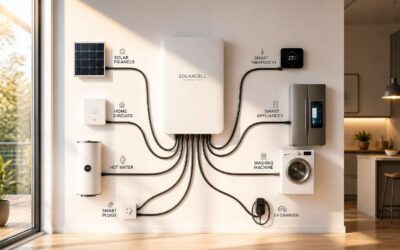
South Africa’s energy landscape has shifted dramatically. The solar battery and inverter combination is now central to household resilience. These systems store solar power for evening use, reducing reliance on municipal supply. The inverter converts direct current from panels into usable alternating current. It also manages the flow of energy between the grid, the battery, and your appliances. Sizing matters. A small battery might cover a few hours of load shedding, while a larger unit sustains a full evening. Consider the following:
– Daily energy consumption in kilowatt-hours.
– The surge rating of your appliances.
– Available roof space for solar panels.
Choosing the right solar battery and inverter requires matching capacity to your specific needs. It is an investment in continuity. For many South Africans, this means keeping the lights on and the fridge cold, without the noise of a generator. The technology has matured, and the benefits extend beyond emergency backup, enabling smarter energy use.
Choosing the Right Power Conversion Unit
Choosing the right power conversion unit is the secret to a resilient home setup. The grid in South Africa demands respect. It ebbs and flows, often with little warning. Your solar battery and inverter system is the bridge over those unpredictable waters. Yet a bridge built for a bicycle won’t carry a truck. The same logic applies to energy. The unit you select must match the load it will carry daily.
The inverter is the conductor. It transforms the direct current from your panels into the alternating current your appliances crave. The battery is the reservoir. It stores that power for the night, or for the next scheduled blackout. Pairing them correctly is an exercise in precision. A mismatch here leads to constant tripping or a shortened battery lifespan. You need to consider the surge rating, not just the continuous power output. Your fridge kicks hard when it starts. Your kettle is a relentless draw.
To nail the selection process, you should examine the technical passport of each option closely:
- Check the continuous wattage against your peak household demand
- Verify the inverter’s wave form, pure sine wave is essential for modern electronics
- Match the battery chemistry with your budget and space
Getting this balance right means your solar battery and inverter operate in harmonyhebdomadaires. It is about securing a steady flow, not just surviving the darkness, but thriving through it with the lights on and the Wi-Fi humming.
Sizing and Combining Components for Maximum Output
The sun over Johannesburg does not simply rise; it performs. That performance demands a system tuned with precision. Sizing a solar battery and inverter without considering your household’s peak surge is like drawing water with a sieve. Many homeowners purchase based on appliance labels, yet those labels lie about starting currents. Your kettle may boast 2,000 watts, but its first second demands nearly double that, and your inverter must survive that surprise.
For maximum output, I weigh three variables:
The inverter’s continuous wattage against real draw, not theoretical totals.
The battery’s discharge rate, since a deep cycle does not forgive overestimation.
The gap between solar generation and consumption, measured in cloudy hours.
Only then can a solar battery and inverter dance in harmony, converting every scattered photon into usable power. The magic lives in that calculation, not in the hardware alone.
Financial Benefits and Incentive Programs
South Africa’s energy landscape is shifting, and the tax rebate on solar panels has fundamentally changed the arithmetic of home power. But the financial picture extends beyond that initial incentive. When you pair a solar battery and inverter, you are buying protection against a grid under strain.
Here is what the numbers show:
– Reduced reliance on diesel generators during load shedding
– Lower municipal bills through net metering credits
– Protection from tariff hikes that outpace inflation
A solar battery and inverter system typically pays for itself within five to seven years. The real gain is psychological. You stop calculating every appliance’s running cost when the grid fails. The incentive programs are there. The question is whether you will act before they change.
Installation, Maintenance, and Lifespan
Every installation tells a story, and the solar battery and inverter pairing is no different. I have watched homeowners across Johannesburg struggle with placement only to realize that orientation matters more than they expected. The inverter needs ventilation, while the battery demands a temperature controlled space. Get this right from day one and you will thank yourself later!
Maintenance rarely requires much effort, but the little tasks add up. Check the ventilation grilles monthly. Inspect cable connections for corrosion every quarter. A soft brush and a keen eye work wonders.
- Clean the battery terminals biannually
- Update inverter firmware as released
- Monitor voltage readings weekly
Lifespan hinges on discharge depth. Most lithium units last a decade with proper care, but lead acid variants may only manage half that. The solar battery and inverter relationship ultimately rewards patience and consistency. Treat them well, and they will return the favour through years of reliable service.


0 Comments